Since the dawn of humanity, people have been telling stories. It’s literally the oldest form of human connection.
As a nonprofit leader, it’s also one of the most powerful tools in your fundraising belt (if not THE most powerful).
We know you have great stories, but are you telling them in a way that makes them unforgettable? And turns admirers into donors? Here’s how.
Empathy: Get People in the Feels
Often we hear stories about something terrible that happened to someone. We want to think, “Oh, that would never happen to me. Poor choices led to that outcome.” But life isn’t that simple. (We want it to be, because it means then we’re in control. We’re not.) The point is, when crafting stories about your programs and service recipients, get yourself and your donors out of the “that won’t happen to me” mindset. Think more in terms of “I’m basically a bank failure or two and a serious injury away from houselessness.”
Not to get all dark and doomsday, but encouraging your well-heeled donors to walk a mile in your service recipients’ well-worn shoes is the fastest way to get them to empathize and really see things from someone else’s point of view. Once you have their empathy, you’re that much closer to garnering their donations.
Connection: Make People Encourage Others to Feel
Connection is what it’s all about, right? When you’re moved by something, when you’re hit right in the feels, in a good way or a bad way, do you want to keep it to yourself? Or do you look around for someone to share it with? Maybe you want to validate what you believe, vent about injustice, maybe you want to laugh so hard it hurts. Whatever the motivation, we humans are programmed to connect and share.
Engagement: Make People Feel So Hard They Share. And Donate.
A well-told story turns donors into powerful marketing mavens! People are compelled to share great stories they hear. Don’t you want to share a great story when you hear one? Isn’t it more meaningful when shared? It’s part of the human condition and it always has been! Great stories will be retold again and again. People probably won’t remember the names of the individuals you helped, but they will very likely remember your nonprofit’s name and the impact you had in that person’s life. We bet they’ll encourage their friends and family to support you, as well. A fantastic story expresses values important to you and the ones you serve. Well-told stories are contagious.
Turn Complexity to Clarity
Are your nonprofit’s mission and service offerings rather hard to explain in a nutshell? Do you hear others describing your work, but in a way that doesn’t encompass everything you do? Likely your donors don’t even know about everything you do. They’re not aware of the amount of effort it takes to run all of the programs you run and provide all of the services you provide. The mission itself is the big picture; what happens behind the scenes is far more complex and nuanced. Donors and supporters will have a deeper understanding of everything you do and all of the services you provide if you convey this information like a storyteller.

Stories are fantastic at making complicated issues understandable. Ever read a Lisa Genova novel, or watched the movie Still Alice, based on her novel? Lisa is a neuroscientist with a degree from Harvard. Many of us would consider it nearly impossible – a punishment, even! – to fully comprehend the papers she published while earning her PhD. But Lisa is also a bestselling novelist, who takes incredibly complex brain issues (early-onset Alzheimer’s, left brain neglect, autism), and turns them into understandable, relatable, and heartbreakingly poignant stories.
All stories contain nuance. How will you use that nuance to your advantage and grab folks in the feels? Start by using your tools to reach all their senses. Like their sense of sight.
Video Storytelling
In today’s digital age, images and videos are critical. With more than 65% of the population self-identifying as visual learners, doesn’t it make sense that video would enhance your storytelling? Visual content pulls harder at heartstrings than words alone, so cater to what you know about how people learn. Most would prefer to watch a video instead of reading an article. The vast majority of internet users consume video content daily; they’ve been doing so for years.
Encourage Empathy
Folks are more likely to share a video than they are an article. Why? Perhaps because video is more powerful, particularly if you’ve mastered that audio/visual connection. People remember things better when they’re watching something that correlates to what they’re hearing. Remember, hit ‘em in all the senses!
Cultivate Connection
Again, storytelling is the oldest form of human connection and communication. If you or your loved one is battling a deadly disease, you automatically have something in common with the millions of people in the world who are also dealing with a deadly disease. Human connection is universal when sharing stories. Words are powerful, but stories told through video often conjure up even more emotion, igniting generosity in donors.
Engagement: Share again and again and again!
Unlike a live speech or address, video can be used over and over again. You can debut your heartstring-tugging video at your event, then repurpose it on your website, your YouTube channel, even your social media channels. A professional video offers a higher ROI for you and your org than a live speech, since you can recycle it for use in multiple campaigns.

Visual Media
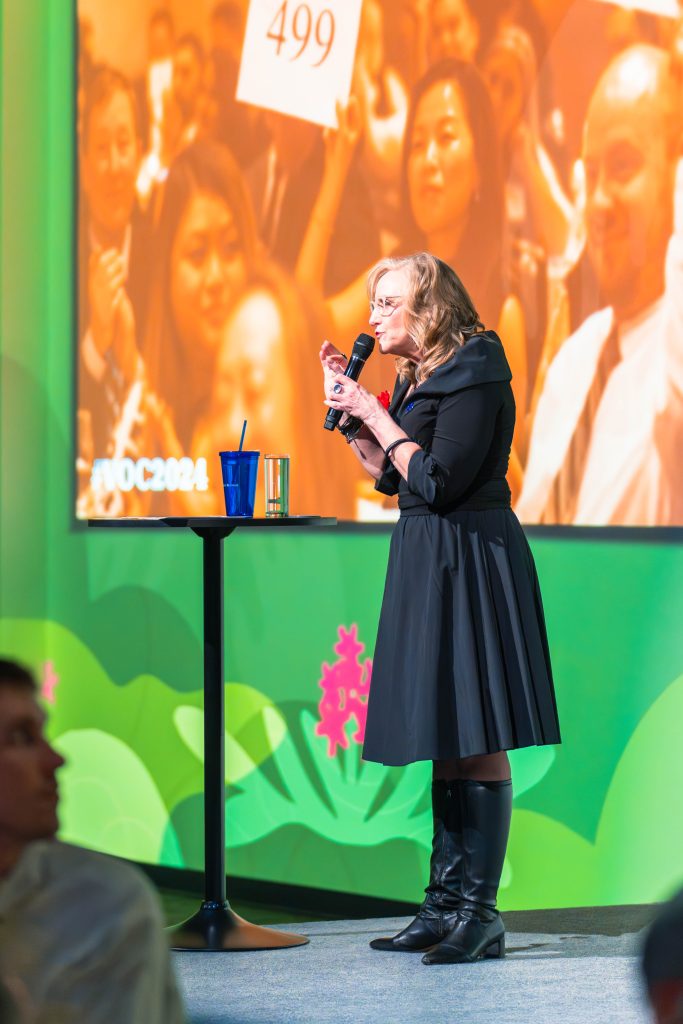
When planning your fundraising event and collateral assets, always think visually. Think big beautiful signs. Consider where you can use lighting and color to influence people’s moods and emotions.
PowerPoint Presentations
Your PowerPoint slides are another invaluable storytelling tool. They keep your guests in the know. You can use them for gratitude, sponsor recognition, revenue stream marketing…the works! They serve as yet another powerful storytelling device when they include mission language, engaging imagery and demonstrations of impact. Think of how many eyeballs will be trained on your PPTs over the course of the evening! It’s the main character in a “cast” of visuals.
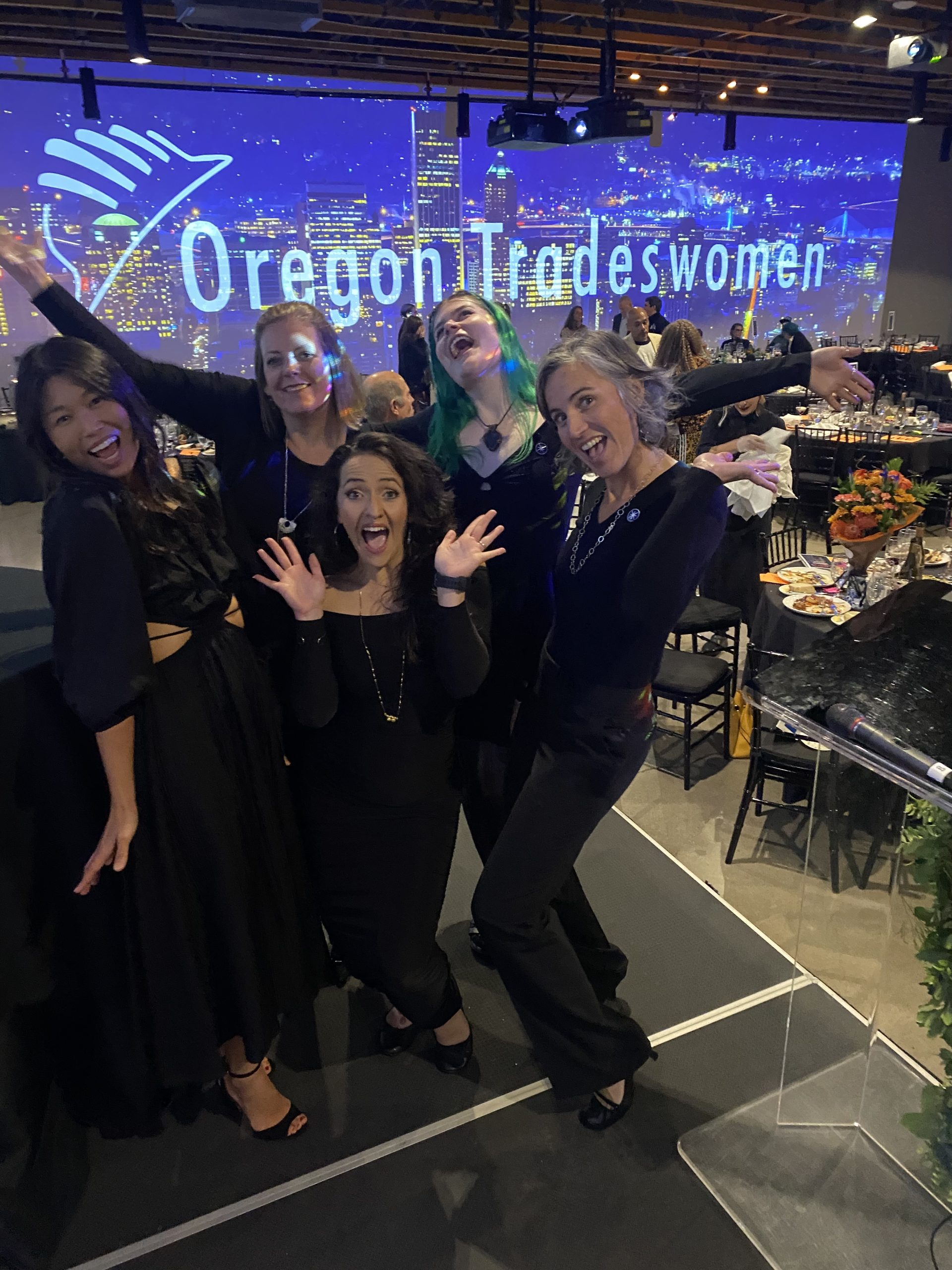
Video Walls + Projection
Mission-focused images projected onto walls are very effective when it comes to branding and introducing stories. You’re literally immersing guests in your org’s stories and mission. Wall projections create movement, visual drama and an eye-catching backdrop. The result? Your guests are left with a deeper understanding of your work and they experience a more emotional response to your NPO and your stories.
Lighting
Light and color have a powerful effect on people’s moods. There’s actual psychology behind it! Before our brains even register what color we’re seeing, there’s a deeper subconscious part of our brains that’s already telling us how we feel. So use color strategically to create the mood you want to convey. (A great AV vendor will be well-versed in this language. Need referrals? We can help!) Use bright lights strategically, as well; your registration area and your games/revenue streams should be spotlighted. But your social/cocktail hour and dance party should be a bit more muted – think mood lighting. Ditto for dinner lights. Soft, ambient light works best here.

Digital Marketing
Social Media
Not everyone loves social media, but there’s no denying it’s a powerful marketing and storytelling tool. Reach out to your supporters using short-form videos. Pair still pictures with attention-grabbing captions. Tell short stories more frequently, to keep supporters up-to-date about your work and the impact you’re making. Use related hashtags and encourage supporters to use them, as well. Remember to keep ASKING followers to like and share your content to reach even more people.
Email Campaigns
Email campaigns are much more effective when they’re personal and filled with stories! Since you can’t send a personal email to each and every one of your subscribers, make sure your content is personalized and tells a meaningful story or stories. Demonstrate impact with images and video links, and wrap it up with clear calls to action; show folks why you NEED their support and why you need it NOW.
Website + Blog
While your social media channels and email campaigns are best suited for shorter-form videos, your website (and/or blog) is the perfect place for telling more involved stories about your org and the impact you’re making. Include a variety of content: videos, still images, full-screen graphics, motion graphics, graphs and visuals that reinforce the good you do. And make sure your site is optimized, making it that much easier for supporters to help you spread the word about your great work.
There’s a lot of competition out there for donor and sponsor dollars. Successful storytelling will help your org stand out! A well-told story will not just educate, it’ll inspire. And when folks are inspired by the work you’re doing and the impact you have, they’re encouraged to be a part of it – by donating! Together, we can tell the stories that ignite generosity. Reach out – let’s make some magic!